Train for a Diagnostic Medical Sonography Career at Integrity College of Health!
Diagnostic Medical Sonography Classes Are Now Enrolling & Start This October
Are you looking for a healthcare career that combines technology, patient care, and hands-on skills? Diagnostic Medical Sonography (DMS) could be the career path you’ve been looking for. Diagnostic Medical Sonographers, also commonly called Ultrasound Technicians or Sonographers, use specialized imaging technology to help healthcare providers see what is happening inside the body. From imaging internal organs and soft tissues to observing developing fetuses, sonographers play an important role on the healthcare diagnostic team. If this sounds like the kind of career you could see yourself pursuing, now is a great time to start your training. Integrity College of Health (ICH) is now enrolling for its Diagnostic Medical Sonography program, with classes starting this October at its Pasadena, California campus.
What Does a Diagnostic Medical Sonographer Do?
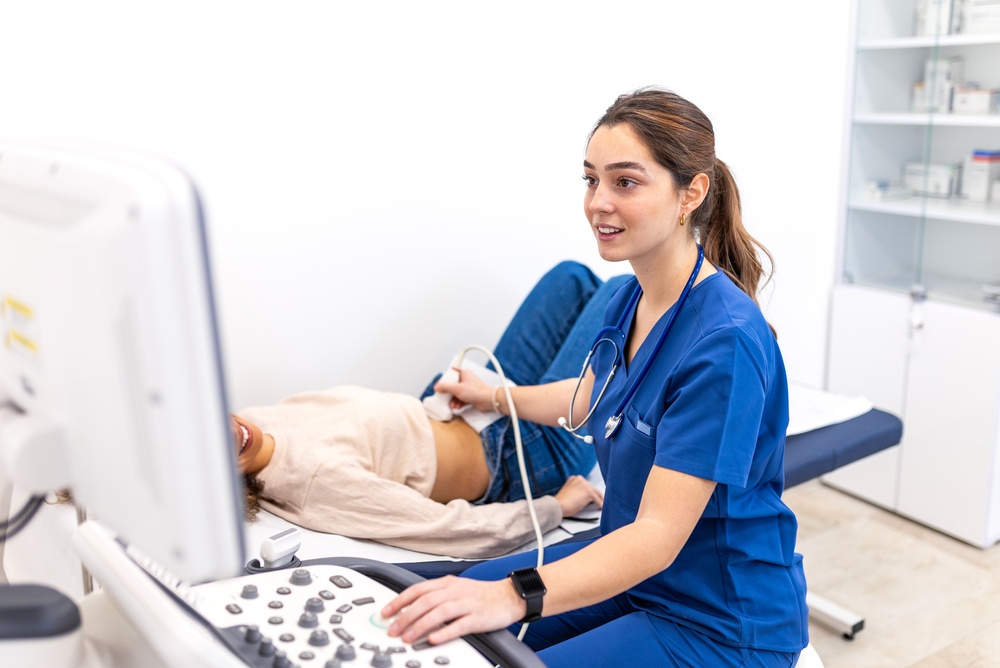
Diagnostic medical sonography, commonly known as ultrasound, uses high-frequency sound waves to create images of structures inside the body. Unlike some other types of medical imaging, ultrasound does not use ionizing radiation. A Diagnostic Medical Sonographer operates sophisticated ultrasound equipment to produce images of internal organs, soft tissues, and blood vessels. Sonography can also be used to observe fetal development during pregnancy.
A DMS career involves much more than just operating equipment. Sonographers work directly with patients and communicate with other members of the medical team. Depending on the workplace and procedure, their responsibilities can include reviewing patient information, positioning patients, operating ultrasound equipment, capturing images and measurements, evaluating image quality, and communicating information to physicians. This combination of technology and direct patient interaction can make Diagnostic Medical Sonography an appealing option for people who want a hands-on healthcare career.
What Skills Do Diagnostic Medical Sonographers Need?
Because sonographers interact with patients and healthcare professionals throughout the day, communication and interpersonal skills are important. Patients may have questions or feel nervous about their procedure, making professionalism and clear communication valuable parts of the job. Sonographers must also communicate effectively with physicians and other healthcare professionals.
Organization and attention to detail are also important. Sonographers need to capture quality images, take accurate measurements, document information, and manage multiple responsibilities. They may work independently during portions of an exam while also functioning as part of a larger healthcare team.
Where Do Diagnostic Medical Sonographers Work?
Diagnostic Medical Sonographers work in a variety of healthcare environments, including hospitals, imaging centers, physicians’ offices, clinics, and mobile imaging units. For students interested in healthcare but looking for a career outside of traditional nursing or medical assisting roles, sonography offers another way to become an important part of the patient care and diagnostic process.
Where Can You Train for a Diagnostic Medical Sonography Career?
At Integrity College of Health (ICH), in Pasadena, California, our healthcare career training programs are designed to prepare you with the knowledge and skills you need for the career you want. ICH’s Diagnostic Medical Sonography program combines coursework, clinical lab training, and a clinical externship to help students develop both theoretical knowledge and practical skills. Students receive training in subjects including medical terminology, anatomy, physiology, physics, and ultrasound technology. You will also learn how to:
- Verify patient history and health status
- Operate ultrasound equipment
- Record and analyze findings during an exam
- Select and capture appropriate images
- Take measurements and perform calculations
- Evaluate ultrasound tests and images
- Communicate with patients and physicians
- Consult with medical professionals regarding patient results
ICH maintains institutional accreditation with the Accrediting Bureau of Health Education Schools (ABHES) and is licensed by California’s Bureau for Private Postsecondary Education (BPPE).
ICH Offers Hands-On Ultrasound Training with SonoSim
Hands-on training is an important part of preparing for a career in sonography. At ICH, students have access to SonoSim, an ultrasound training technology that complements classroom and lab instruction. SonoSim provides access to a large library of real patient cases covering normal and pathological conditions while offering probe-positioning guidance and feedback. Students also complete an externship at an off-site medical facility, providing an opportunity to gain experience in a real-world healthcare setting.
How Long Is ICH’s Diagnostic Medical Sonography Program?
ICH offers scheduling options to help students find training that works for them, including both morning/afternoon classes and an evening program. The Diagnostic Medical Sonography program can be completed in as few as 84 weeks with the morning/afternoon schedule or 99 weeks with the evening schedule.
Upon successful completion, graduates receive a Certificate of Completion and Diagnostic Medical Sonography Diploma.
Start Your Diagnostic Medical Sonography Training This Fall!
If you’ve been thinking about pursuing an Ultrasound Technician or Diagnostic Medical Sonography career, this fall is a great time to get started. Integrity College of Health is enrolling now for Diagnostic Medical Sonography classes beginning this October at its Pasadena campus. Students benefit from hands-on training, limited class sizes, flexible scheduling options, experienced faculty, and Career Services offering career placement assistance. Contact Integrity College of Health today to learn more about the Diagnostic Medical Sonography program and how you can get started this October!